Industrial property
Buy a new industrial unit or refurbish an older shed?
Compare a new industrial unit with an older shed at the point that matters: when it is ready to trade. Includes a worked example and viewing questions.
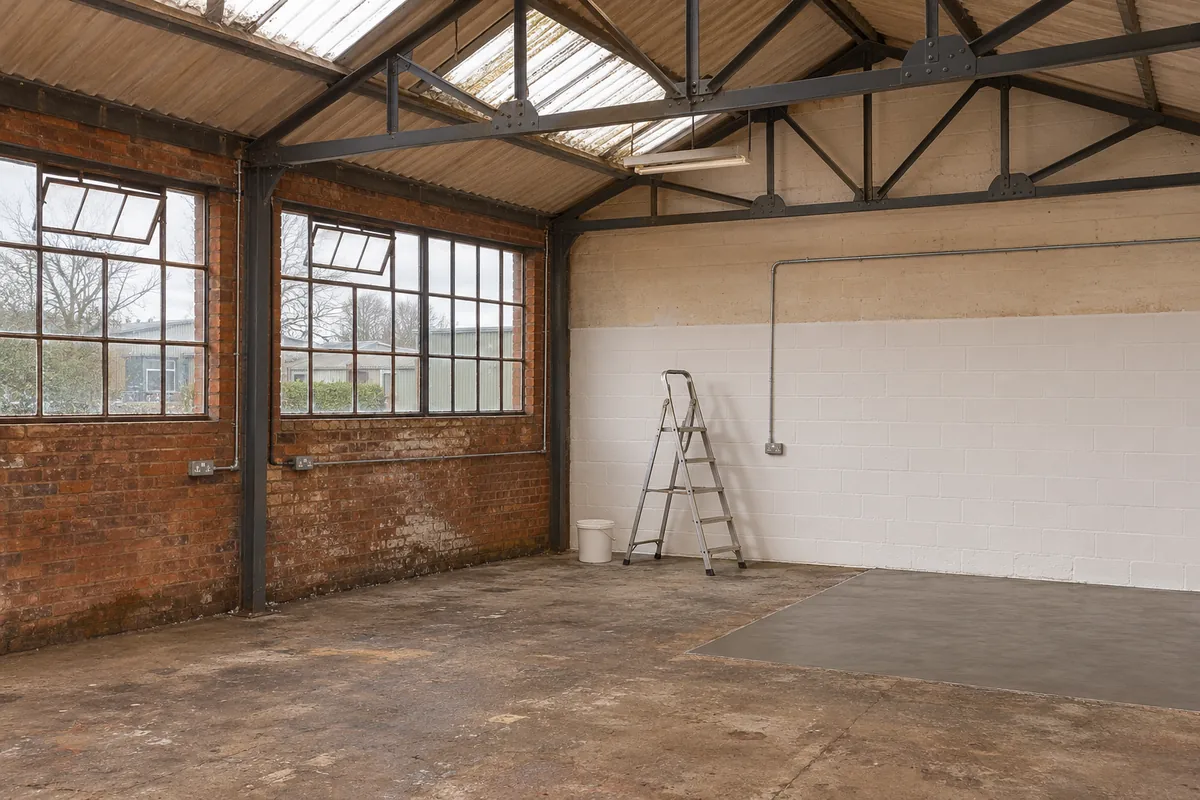
The new shed smells of fresh paint. The old one comes with a mystery switch and a bloke who says, “That’s always been like that.” Neither tells you what it will cost to start trading.
Buy a new industrial unit if its delivered specification meets your needs and the premium buys a more predictable move. Refurbish an older unit if it already has the layout, location or yard you need and there is enough room in the budget and programme for the work. Compare both at the same point: the day you can use the building for its intended purpose. That means pricing fit-out, approvals, delays and the running costs you will inherit, alongside the purchase price.
Define ready to trade before comparing prices
Write down what has to happen in the first week: who arrives, what machinery runs, which deliveries take place and where stock goes. Translate that into a minimum specification. A small food packaging business might need washable surfaces, temperature control and a particular layout. A joinery business may care more about extraction, electrical capacity and a route for long materials. The same empty shell could be nearly ready for one business and months away for the other.
Divide the specification into essentials, improvements you can phase in and things you would enjoy but can live without. Add a latest viable move date and a limit for how long you can operate from two sites. People tend to put the office kitchen on the drawings early. The bigger question is whether the new site can still dispatch orders when the old one closes.
Give the same specification to both sellers or agents. Ask them to mark what is included, what needs independent confirmation and what you would have to provide. Ask for plans, any equipment and service records, and details of shared yards or roads. If there is a hard constraint such as a fixed shift pattern or a carrier collection window, compare the destinations before paying for a detailed survey. Our East Midlands industrial location guide shows how to test both staff and delivery journeys.
New industrial units: check what the price actually buys
Ask for the written handover specification. What is installed, connected and commissioned? Which items are just provision for something you can install later? Check the electricity supply against your actual equipment schedule and ask for evidence of the capacity available to your unit. A route for a cable or a board with empty slots does not tell you when you can turn the machines on. Allow for the contractor's work within the unit as well as any external connection changes.
Find out what is included for lighting, heating, toilets, offices, internet, drainage and loading. Check the clear heights under services and the floor specification, particularly if you need racking or heavy equipment. If the unit comes with an office shell, cost the partitions, wiring and finishes you need. Ask the contractor whether a job must wait for the developer to finish, or whether work can be planned to overlap with other tasks. For property checks separate from age, see our guide to industrial unit access, power and permitted use.
Where the developer is still building, ask what controls the handover date and when you can get in to measure up. Agree what evidence your solicitor and surveyor need for completion, including commissioning records and any warranties that apply. Ask what the snagging process is, who owns the roads and services and which estate costs fall to you. A new unit can still be the simpler choice; the strength of that choice depends on what is specified and what can be verified.
Older sheds: buy the useful bits, price the unknowns
An older building may already have a generous yard, a working layout or offices you can reuse. Those features can be expensive or impossible to add to another unit. Check whether they genuinely suit you and what their remaining life looks like. A broad loading apron might save you from changing how you dispatch; a dated office might be perfectly usable until the next quiet trading period.
Give your surveyor the intended use and works rather than commissioning a report in the abstract. Discuss the roof and rooflights, evidence of water ingress, the slab, drainage, structures, doors, ventilation and visible services. Ask which points are urgent, which will need further investigation and which can be planned over several years. Ask what could be checked before exchange with the seller's agreement. A small visible stain might need a simple repair, or it might be where a bigger problem has chosen to introduce itself.
Where there is potential for asbestos to be disturbed, plan for that before pricing invasive work. HSE guidance on asbestos surveys distinguishes management surveys from refurbishment or demolition surveys. Ask an appropriately competent professional what the planned work requires, which areas are covered and whether anything remains inaccessible. Build any resulting investigation, specialist work and disruption into the comparison. An older building can still be a sound option; it is the unresolved cost and timing that you need to understand.
Put permissions and sequencing on the same page
For premises in England, GOV.UK explains that building regulations approval is separate from planning permission, and that both may be needed. Check the lawful use and any conditions against what the business will actually do. If you plan to add extraction, a mezzanine, external plant or changes to openings, ask your advisers what checks or approvals the specific works require. Separately, get your solicitor to check title or lease restrictions, estate rules and any consents you need.
Start a programme with the few items that control everything else. If a machine cannot be commissioned until the supply is upgraded, put that dependency on the plan. If a contractor cannot confirm the roof scope until an inspection, leave a decision date and a fallback. Confirm which tasks can safely overlap and which require access after completion. The important date is when the unit can do its job, rather than when the keys change hands.
Ask what happens if a key task slips by six weeks. Could you keep trading at the old address? Would there be rent overlap, storage charges or a second move? For a planned letting, would a prospective tenant still be able to move on the revised date? Keep these questions beside the contractor's estimate. A work schedule with one fixed deadline and seven hopeful assumptions looks neater than it deserves.
Compare the total cost to occupy
Use the same headings for both options: purchase price; applicable tax and fees; borrowing and holding costs; fit-out and repairs; moving and overlap; and contingency. Separate sums supported by quotations from allowances for things still being investigated. Keep adequate reserves for costs after opening, including maintenance, estate charges and insurance. Ask advisers to verify the costs and treatment that apply to your deal, including any tax or finance implications.
A hypothetical comparison: a new unit costs £465,000, with £36,000 of fit-out, £8,000 for moving and overlap and a £10,000 reserve for works uncertainty. That gives a subtotal of £519,000 before tax, fees and finance. An older unit costs £405,000, with £62,000 of refurbishment and fit-out, £14,000 for moving and overlap and a £20,000 works reserve. The subtotal is £501,000 on the same basis. These are invented figures to demonstrate the method, not a quote or a local market benchmark.
The £60,000 price difference has become an £18,000 difference in the subtotal. A further £25,000 older-unit repair, beyond the allowances already included, would take that option to £526,000 before those excluded costs. Conversely, if investigations pin down the repair scope and the older unit has better loading or less ongoing maintenance than you expected, its case strengthens. Confirm separately what each option leaves you with in available cash and what assumptions need to hold to start trading on time.
If you are buying to let, work backwards from the tenant
An investor needs to decide which works are necessary to attract the likely occupier and which can be left for them to specify. Upgrading a roof or providing workable services can solve a broad problem. Spending heavily on bespoke offices for an imagined tenant might narrow the appeal. Ask a commercial agent or surveyor for evidence from comparable units, on terms actually agreed where known. Compare size, specification and condition rather than assuming a refurbishment automatically produces a rent premium.
For a vacant building, allow for a gap between practical completion and rental income, and for marketing, incentives or further work if appropriate. Where there is a tenant already, have your solicitor check the repair and alterations provisions and what you can do while the unit is occupied. A well priced refurbishment can still make sense for an investor, but check whether the likely income justifies the works and what happens if reletting takes longer.
Three questions to settle before you offer
Does a newer unit mean I can move in sooner?
Only if the connection, access, handover and fit-out dates support it. Ask what has already been commissioned and identify the last milestone that could stop you from opening. An older unit already fitted for a similar use might be ready sooner.
When does the older shed make more sense?
When it brings useful features that would be costly to replicate and the condition, approvals and works can be investigated enough to set a sensible budget. Price it with a fallback for the largest outstanding risk before deciding how much to offer. If your contractor cannot yet see the part that matters most, the cheapest figure in the spreadsheet is still an estimate.
Where should I start if both options look close?
Price the same day of operation in both buildings. Ask what the budget includes, what the contractor or developer will commit to, and how long you can absorb a delay. Then compare the things you can't change easily: location, yards, access and layout. The colour of the front door can wait.
PropSelect searches against written requirements for industrial units, workshops, warehouses and other commercial purchases strictly below £2 million across the East Midlands, Peterborough and the Golden Triangle, including Derby, Nottingham, Leicester and Northamptonshire. An engagement fee and a purchase fee calculated as a percentage of the purchase price are agreed in writing before instruction. We find property; your surveyor, solicitor and other qualified advisers check the specifics. Send us your commercial property brief with your purchase ceiling, intended use and latest opening date. If one feature makes the whole move possible, put it at the top.