Commercial investment
£50,000 invested. £10,000 cash flow. Show me the workings.
A worked commercial property example: £50,000 initial cash, £10,000 annual cash flow before tax, tenant costs, Section 24 and refinancing explained.
£50,000 invested. £10,000 annual cash flow before tax. That gets a landlord’s attention. The next question should be what has already been deducted, rather than where to sign.
Commercial property can offer rental income, leases that place substantial property costs with the tenant, and opportunities to improve income before refinancing. It can also leave you with an empty building, ongoing bills and a lender who still expects payment. The investment is in the property, tenant and lease together.
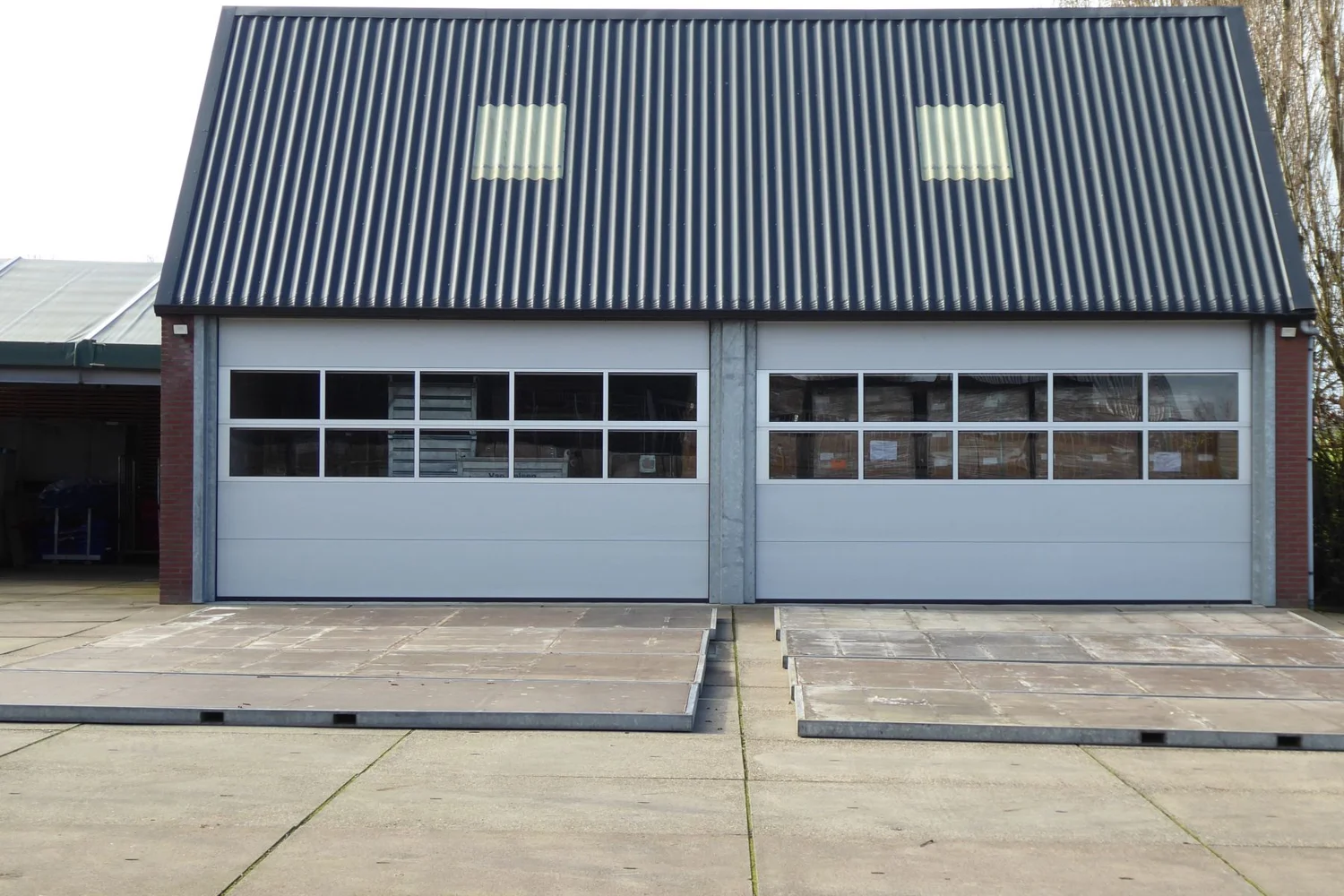
This article expands the PropSelect carousel with the full workings. Every financial example below is hypothetical. None represents an available property, a typical return or a lending offer. The photographed building is illustrative too. We are explaining how to assess the strategy, not claiming to have found a money machine with a roller shutter.
What does £50,000 invested actually buy in this example?
Assume a commercial property costs £150,000. An interest-only mortgage provides £110,000, leaving a £40,000 deposit. Another £10,000 is allocated to buying costs and a cash reserve. Total initial cash committed is therefore £50,000.
That mortgage represents approximately 73.3% of the purchase price. It is an assumption, not confirmation that a lender would advance that amount. The property, borrower, lease, valuation and rental cover all need to qualify. If the lender offers less, the required deposit rises.
The buying-cost allowance needs replacing with actual figures before making an offer. Include the applicable transaction tax, legal work, survey, finance charges, sourcing fees and any other relevant expenditure. Check VAT treatment with advisers rather than assuming the advertised price is the total cash requirement. No refurbishment is included in this example. If works are needed, budget for them separately and revisit the total cash invested.
Keep the reserve visible. Money left available for a difficult month is still part of the capital you have committed, even when it has not yet been spent.
£20,000 rent is not £20,000 profit
The annual calculation is deliberately simple:
- Gross rent collected: £20,000.
- Mortgage interest: £8,000.
- Allowance for landlord costs and reserves: £2,000.
- Remaining annual cash flow before tax: £10,000.
The £10,000 is therefore an illustrative amount remaining after the stated interest and allowance. It is not gross rent, a guaranteed profit or the amount you necessarily keep after tax. Setting aside a reserve also differs from incurring a tax-deductible expense; your accountant calculates taxable profit separately.
Annual interest of £8,000 on £110,000 borrowing implies approximately 7.27%. That is a modelling assumption, not a quoted mortgage rate. Interest-only means no regular capital repayment has been deducted. A repayment mortgage would change the cash-flow calculation.
Likewise, £2,000 is an assumed allowance, not a universal operating budget. Itemise management, accounting, unrecovered insurance or service charges, inspections and contingency for the actual property. Avoid counting a cost twice, but do not assume the tenant’s responsibilities eliminate every owner expense.
The example’s gross rent is 13.3% of its £150,000 price. That is a high illustrative yield, not a claim about normal commercial returns. It should prompt harder questions about tenant strength, lease length, condition and location. An attractive percentage can be compensation for a problem the brochure has politely skipped.
Your tenant can pay more than the rent
Under suitable full repairing and insuring lease provisions, repair and maintenance obligations can sit with the tenant. Buildings insurance is often arranged by the landlord and its cost recovered from the occupier. In a multi-occupied property, some costs may pass through a service charge instead.
Business tenants normally pay for their utilities, business rates and fit-out. Certain legal and professional costs connected with their applications for consent may also be recoverable. That does not mean they automatically pay your purchase solicitor, every dispute cost or every building improvement. Goughs’ explanation of commercial tenant costs describes the distinctions.
Their grand entrance. Their invoice. Subject, as ever, to what was actually agreed.
Ask your solicitor to identify exclusions, caps and any schedule of condition limiting the repairing obligation. Ask your surveyor about the building’s condition and likely expenditure. Government guidance on tenant responsibilities makes clear that the lease determines repair and maintenance responsibilities. You need the documents, not simply the letters FRI on a sales sheet.
Section 24: a genuine distinction, not a reason to skip the sums
Section 24 restricts finance-cost relief for individuals letting residential property. The rules were fully implemented from April 2020. Companies are outside this restriction, and borrowing wholly for commercial property is not affected by it. Mixed residential and commercial borrowing needs appropriate apportionment, as explained in HMRC’s property income manual.
For a qualifying individual paying 40% tax, £8,000 of interest could produce £1,600 of residential finance-cost tax reduction, compared with £3,200 of tax relief through a fully allowable commercial interest deduction. That is a £1,600 difference in the interest treatment alone, assuming sufficient qualifying income and full eligibility.
The residential reduction is subject to limits; it is not automatically 20% of every interest payment in every circumstance. See HMRC’s explanation of how the reduction is calculated.
Do not add this £1,600 to the £10,000 headline as extra income. The headline is before tax. Your ownership structure, other income, deductible expenses and individual circumstances determine the actual liability. A residential company landlord would not gain this particular Section 24 advantage by switching sectors.
Create additional rent by solving an occupier’s problem
A useful commercial strategy starts with evidence of an opportunity: a unit let below market rent, space that could serve another occupier, or a practical improvement businesses are prepared to pay for. A stronger specification only creates value if it meets demand at a cost that makes sense.
For example, an outdated office area inside a workshop might deter otherwise suitable businesses. A properly costed improvement could widen the tenant pool. Alternatively, subdivision might make a large space usable by smaller firms. Neither is automatically worthwhile. Check access, services, planning, building requirements, title restrictions and management costs before assigning additional rent to a sketch.
Obtain comparable letting evidence and discuss incentives and likely letting periods with local professionals. Establish the legal route to the new rent: an applicable review, renewal, agreed variation or new letting. Existing rent cannot simply be increased because the owner’s spreadsheet would prefer it.
A good tenant at a sustainable rent may be more valuable than an ambitious asking rent followed by months of silence. Judge the proposed change by the extra income after its costs, timing and risks, not by the largest number someone is willing to type into a forecast.
How an extra £5,000 of rent can support more value
This is a separate valuation illustration, not a continuation of the £150,000 purchase example. It demonstrates the relationship between rental income and investment value using a simplified calculation.
At an unchanged 8% valuation yield, £20,000 annual rent divided by 0.08 indicates £250,000. At £25,000 rent and the same yield, the calculation gives £312,500. The difference is £62,500.
This arithmetic is our illustration, not a surveyor’s valuation. RICS explains that investment valuation assesses market rents and market-based yields. The selected method must suit the investment; lease terms, tenant strength, unrecovered costs and market evidence affect the result.
The unchanged yield is a major assumption. If the appropriate yield moved to 10%, £25,000 divided by 0.10 would indicate £250,000, eliminating the illustrated uplift despite the higher rent. Increasing sustainable income can help, but a higher rent does not guarantee a particular increase in value.
Refinance, release capital and assess the next purchase
Continue only the separate valuation illustration. Assume existing borrowing is 65% of £250,000, or £162,500. If a lender accepted the £312,500 value and offered the same 65% loan-to-value, the new borrowing would be £203,125.
Repaying the £162,500 old loan leaves £40,625 before fees and other deductions. That surplus could contribute towards another deposit, purchase costs or improvements. It is not £40,625 of additional annual income, and it is not profit from a sale. It is more borrowing secured against the property.
Valuation alone does not settle the loan amount. Rental affordability, the borrower and lender criteria still matter. Shawbrook’s lending guidance explains its valuation requirements and the use of stressed interest rates when assessing affordability. An independent mortgage adviser should test actual options, including fees and any early repayment charge.
Recalculate cash flow after refinancing. At an illustrative 7.27% interest rate, £40,625 of extra borrowing would add approximately £2,953 annual interest. Returning capital to your bank account can help you buy again while reducing what the original property produces each year. Both numbers belong in the decision.
Getting all your money back is an outcome, not an entry requirement
Some transactions can release enough through refinancing to recover the original cash committed. To assess that honestly, count the deposit, buying costs, works, holding expenditure and refinancing fees. Deduct the existing debt and retain an appropriate reserve before describing the money available for another purchase.
Do not reject an otherwise sound investment merely because some capital remains tied up. Equally, do not buy a weak investment because an optimistic valuation appears to promise all your cash back. A plan that only works at the highest rent, highest valuation and most generous lending level has very little room for real life.
Test the £10,000 cash-flow example with three months without rent: receipts fall by £5,000 before any extra vacancy expenses. A two-percentage-point interest-rate increase on £110,000 debt adds £2,200 annual interest. Together those changes reduce the illustrated £10,000 to £2,800 before additional costs and tax. The exercise identifies how much reserve the property may need, not merely how attractive the normal year looks.
Start with the occupier and the location
For a small industrial unit, understand which businesses can use it and why they would choose that estate. Access, power, workable space and staff travel influence demand. For a shop, investigate the pitch, permitted use, local occupiers and reletting prospects. A national brand on the frontage is not a substitute for reviewing the actual tenant and lease.
Our East Midlands industrial location guide explains how to compare estates by real operating requirements. The Golden Triangle guide puts the regional logistics label into context. Use both to form questions about individual properties rather than assuming every building in a popular area will perform alike.
Three questions investors ask
Is the £10,000 annual figure rent or profit?
It is illustrative cash flow before tax, after £8,000 interest and a £2,000 landlord costs/reserve allowance have been deducted from £20,000 rent. Actual expenditure, vacancies and tax change the result. It should not be presented as guaranteed net profit.
Can the tenant pay every property expense?
No blanket assumption is safe. The lease may allocate substantial costs to the tenant, but exclusions, owner expenses and vacant periods still matter. Review the obligations and the tenant’s ability to meet them alongside the building survey.
Can I refinance immediately after raising the rent?
Not necessarily. Timing, lease evidence, valuation and lender requirements vary. Agree a realistic funding strategy with an adviser and model a fallback where refinancing is delayed, offers less capital or does not proceed.
Put your brief before the brochure
PropSelect sources industrial units, warehouses, workshops, shops and other commercial premises across the East Midlands, Peterborough and the Golden Triangle, including Derby, Nottingham, Leicester and Northamptonshire. Purchase prices are strictly below £2 million, separately from tax, fees, finance and works.
Tell us your available cash, purchase budget, preferred areas, income objective, funding position and appetite for works or vacant property. An engagement fee and percentage purchase fee are agreed in writing before instruction. Financial, tax, legal and survey advice comes from appropriately qualified professionals.
The aim is to find property whose present income and improvement potential stand up to scrutiny. Collect the income. Create the uplift where the evidence supports it. Put capital back to work without forgetting what it costs to borrow.
Send PropSelect your commercial investment brief. Your requirements. Our legwork.
General information, checked in November 2026, not financial, tax or legal advice. All examples are illustrative; returns, rent increases, valuations and refinancing are not guaranteed. Values can fall and capital is at risk.